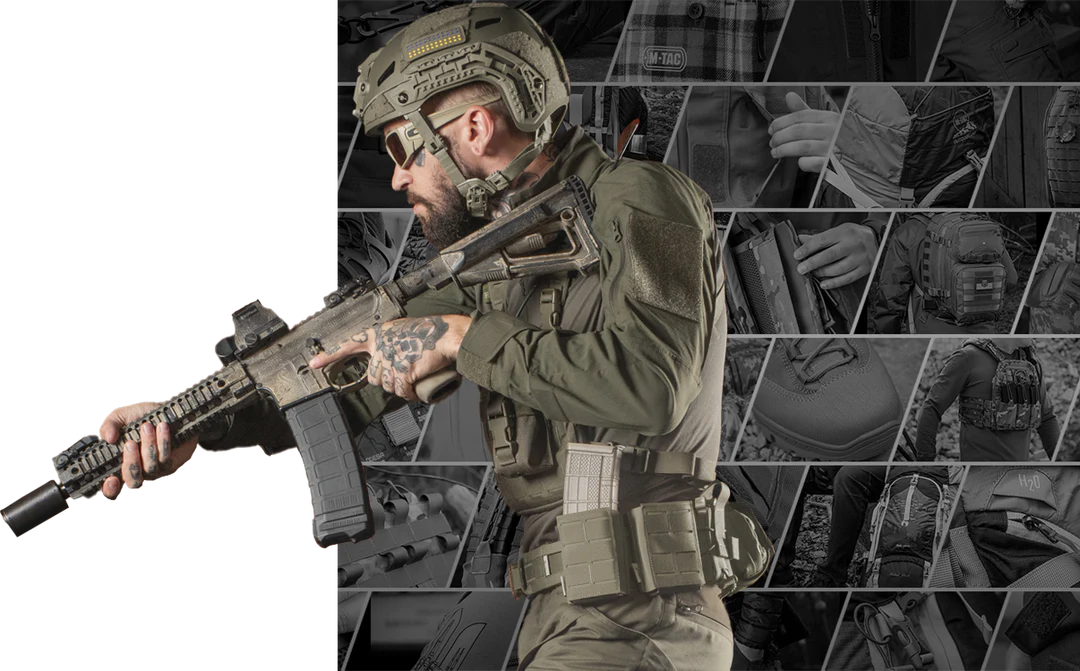
A tactical helmet cover is a fabric shell that fits over a ballistic or bump helmet to protect the painted surface, manage accessories, and reduce visual and infrared signature in the field. It does not affect ballistic rating. What it does affect is how long the helmet stays mission-ready, how well gear stays organized under pressure, and whether the helmet's profile works for or against the soldier in a given environment.

For a piece of equipment this lightweight, the functional return is significant.
Why a Bare Helmet Is a Liability
Ballistic helmets are not created equal in how they handle daily wear — but every shell, regardless of manufacturer, has a painted surface that degrades over time. That coating is not decorative. It seals the composite material against moisture and UV from direct sun exposure that, over years of use, compromises the underlying structure. Door frames, vehicle interiors, gravel, and the hook side of Velcro on other gear all work against that surface continuously. Scratches that cut through the paint expose raw material to the elements and accelerate wear that shortens the helmet's service life.
A cover acts as an extra layer of protection between the shell and everything it contacts. When the fabric tears, the cover gets replaced — not the helmet. For gear that costs hundreds of dollars, that math is straightforward.
The second reason is signature management. A bare helmet shell can reflect light in ways that give away a position. Under night vision optics, a surface that is not NIR-compliant becomes visible even when everything else is concealed. The helmet is typically the highest point on a soldier's profile — the last thing to drop below cover and the first thing visible when moving. A bare shell that stands out under NODs or in direct sun creates risk that a proper cover eliminates.
The third reason is accessory management. Modern helmet setups carry IR strobes, battery packs, counterweights, communication cables, and identification panels. Without a cover, attachment relies entirely on rails and adhesive Velcro — neither of which handles the full range of accessories securely across temperature changes, fast-roping, or vehicle entry and egress. Adhesive Velcro degrades with repeated cycling and temperature variation, which means accessories that need to stay in position under stress eventually don't. A cover with integrated loop panels, cable routing channels, and bungee retention converts the helmet into a managed platform and extends the life of the accessories themselves.
How to Choose a Tactical Helmet Cover
Helmet Type and Model Compatibility
Not all helmet covers are created equal, and one size does not fit all. A cover designed for a high-cut FAST platform will not sit correctly on a PASGT shell. A cover built for one shroud configuration will not align with another. Rail placement, shell curvature, and NVG mount positioning all vary between helmet types. A poor fit means the cover shifts under movement, blocks mounting hardware, or leaves sections of the painted surface exposed to wear.
Before selecting a cover, identify the exact helmet model and confirm the cover is purpose-built for it. The difference between a model-specific cover and a universal option is not a minor detail — it determines whether the cover holds position when it matters.

Materials and Durability
Cordura 500D is the baseline fabric for tactical helmet covers. It resists abrasion, handles temperature variation, and holds up to the friction of constant rigging and re-rigging without breaking down quickly. It is lightweight enough not to add meaningful weight to the setup while durable enough to take the surface damage that would otherwise reach the shell.
Hybrid designs pair Cordura at high-contact points with stretch fabrics at curves — maintaining protection where it matters while conforming to the shell's shape without creating pressure ridges under the padded liner. Mesh construction offers better airflow and heat dissipation for high-tempo operations but sacrifices some abrasion resistance. The right choice depends on the mission profile, not on style preference.
Camouflage Pattern and Environment
Matching the camouflage pattern to the operating environment is a matter of functionality, not aesthetics. Multicam remains the most versatile option across mixed terrain — it performs in woodland, transitional, and partial urban environments and is designed to limit visual and near-IR signature across a wide range of conditions. For primarily urban or industrial settings, Ranger Green or Wolf Grey reduce visual presence without relying on pattern disruption. Coyote Brown works in desert terrain. Black is appropriate for close-quarters and night operations, provided the cover is NIR-compliant.
The helmet is the first part of a soldier's profile visible from behind cover. Its camouflage pattern needs to match the actual environment and the rest of the kit — a mismatched helmet cover undermines concealment that every other piece of gear is working to maintain.
Night Vision and NIR Compliance
For any setup that includes night vision equipment, two things must be confirmed before selecting a cover. First, the NVG cutout must align with the specific shroud and mounting bracket on the helmet — a generic opening positioned incorrectly creates friction every time the optic is deployed. Second, the fabric must be NIR-compliant. A non-compliant cover reflects near-infrared light differently from the surrounding uniform, creating a visible signature under NODs regardless of how well the rest of the kit is managed.
NIR compliance is a fabric and dye property. It cannot be assumed from material grade alone and should be confirmed in the product specifications. For teams running aviation NODs or operating in environments where the opposing force has night vision capability, this is not a customization option — it is a baseline requirement for mission success.

Accessory Attachment and Cable Management
A cover that does not accommodate existing accessories creates more problems than it solves. Before selecting, confirm that Velcro loop panels are positioned where IR patches, identification markers, and unit insignia will actually be placed. Confirm that cable routing channels are present for PTT and battery wires. Confirm that bungee or integrated retention is available for larger items that need to stay secure during dynamic movement.
The importance of a properly organized helmet setup becomes clear the moment an IR strobe comes loose during fast-rope insertion or a battery cable snags on a door frame. A cover that supports the full loadout and keeps it in position under stress is the difference between a functional helmet system and one that requires attention at the wrong time.