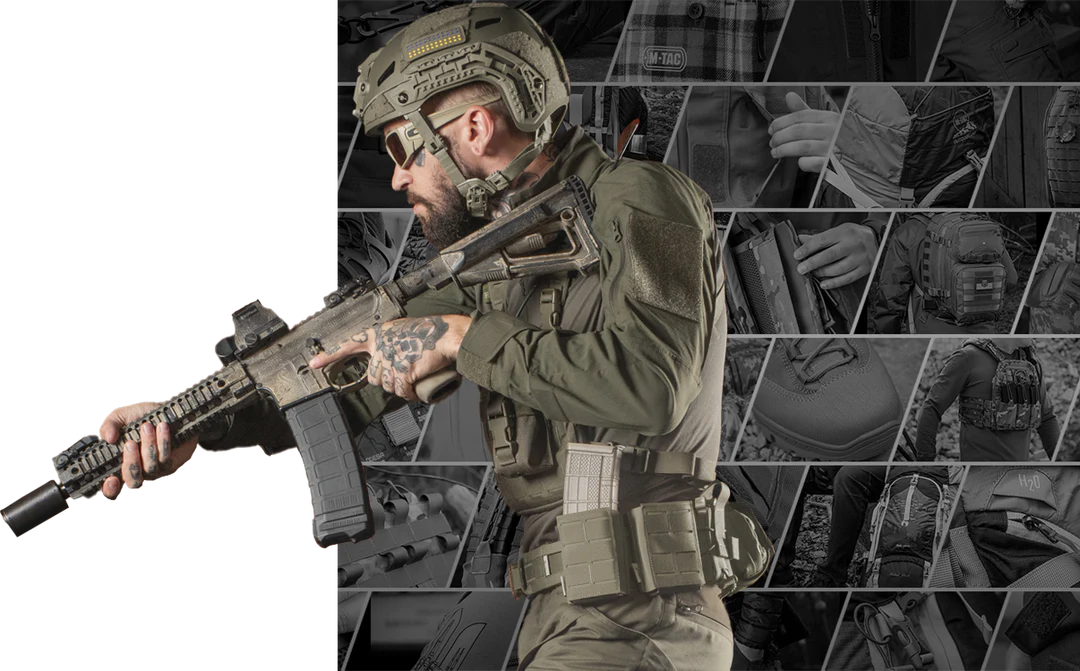
Summer heat is not just uncomfortable. For anyone operating outdoors on the range, in the field, during a long patrol, or deep into a hiking route, it is an active threat to performance and safety. The question of hot weather tactical gear is not about comfort preferences. It is about staying functional when the environment is working against you.
Research from the U.S. Army confirms how serious this gets in practice. According to data published by the Defense Health Agency, 720 service members were diagnosed with heat illness in July 2023 alone, and 84% of heat illness cases occurred on days that did not even reach black flag conditions. The threat is not limited to extreme desert environments or exceptional circumstances. It shows up on ordinary summer days, with ordinary workloads, when the wrong gear compounds the problem.
Tactical clothing for summer needs to solve for that reality, not just look the part.

The Core Problem with Standard Tactical Clothing in Summer
Most tactical gear is designed around durability and protection first. That is exactly what it should do, but those same properties create serious problems in the hot weather months. Ripstop cotton, heavy nylon, layered construction: all excellent for resisting abrasion and managing a load. All counterproductive for ventilation and moisture control when ambient temperatures push above 85°F and physical output is anything above a slow walk.
The most common mistake is treating gear selection as a binary: either the tough field kit or nothing. A second common mistake, one that costs real energy and focus, is wearing heavy tactical clothing in conditions where lightweight alternatives exist and perform equally well on every metric that matters in the field.
Breathable fabrics and structural design features are not a compromise. They are what keep the operator functional past the first two hours.
What Makes Fabric Work in the Heat
Breathable materials fall into two categories: those that wick moisture away from the skin and accelerate evaporation, and those that allow air circulation through the weave structure itself. The best summer tactical wear uses both.
Moisture-wicking synthetic blends, typically polyester or nylon with a fine-denier construction, pull sweat away from the skin surface. This matters because sweat sitting on skin does not cool; sweat evaporating from fabric does. The faster the fabric moves moisture outward, the more efficiently the body regulates its own temperature. In genuine hot-weather gear, the inner face of the fabric stays drier than the outer face. That distinction is worth paying attention to when evaluating options.
Ripstop nylon in lighter weights (around 65 to 70 gsm for shirts, 100 to 120 gsm for pants in summer cut) retains structural integrity while dropping the thermal load significantly compared to standard-weight cotton or canvas constructions. Lightweight but durable materials in this weight class have been refined considerably over the past decade.
Durability trade-offs exist at the extreme light end, but within the functional range for most field applications, they are minimal.
Cotton feels comfortable initially. It holds moisture, insulates when wet, and becomes a liability on long days. Nylon and polyester blends are less forgiving in terms of hand feel at first contact, but the performance difference after an hour or three in direct sun is not a close comparison.
Design Features That Separate Functional from Fashionable
Fabric choice is the foundation. Construction determines whether the design actually lets that fabric do its job.
Ventilation features matter more in tactical hot-weather clothing than most gear reviews acknowledge. Underarm gussets, side vents, mesh-lined chest pockets, and articulated patterning all reduce heat accumulation in the areas where it concentrates first. A shirt with underarm vents worn over a plate carrier operates differently than the same shirt without them, even in identical fabric.
Pocket placement in summer-optimized pants deserves scrutiny. Thigh pockets on a heavy cotton combat pant trap significant heat against the leg. Lower, slimmer pocket profiles integrated into the hip and side seams distribute load without creating a second layer of insulation over the largest muscle group in the body.
Fit and mobility are directly tied to thermal management. Overly tight cuts create friction points and reduce air movement across the skin. Overly loose cuts catch, snag, and create problems with load-bearing systems. A true articulated cut, pre-shaped at the knee, gusseted at the crotch, with a straight but not skinny leg, allows a full range of movement without the bunching up or restricting circulation.
Inseam gussets are worth calling out specifically. They are a minor manufacturing addition that substantially improves both mobility and heat management in the groin and inner-thigh zone, where skin-on-skin contact generates friction and restricts evaporation. Any summer tactical wear without a crotch gusset is behind.
UV and sun protection are often treated as secondary. It should not be. Long-duration outdoor operations in direct sun without UPF-rated fabric result in cumulative skin damage regardless of mission type. For personnel who operate in open terrain, desert, high-altitude, or open water environments, this is a practical concern, not a wellness preference. Rated UPF 30+ fabric provides meaningful sun protection in the UVA and UVB range without altering the garment's weight or breathability profile.

How to Choose Summer Tactical Boots
Footwear is where hot-weather mistakes are most physically costly. The feet absorb impact, regulate a significant portion of body temperature through sweat evaporation, and are the part of the kit that cannot be adjusted mid-mission without a stop.
How to buy summer tactical boots requires thinking through three distinct demands: heat dissipation, moisture management, and structural integrity under load.
Heat dissipation comes from the upper construction. Full-leather uppers that work well in cold conditions become heat traps in summer. Summer tactical boots use fabric panels, typically a ripstop or ballistic mesh, integrated into the upper between structural zones at the ankle and toe box. The mesh provides direct air exchange at the ankle and midfoot, the areas that accumulate heat fastest during sustained movement. A boot with no mesh is the wrong choice for extended operations in environments above 80°F, regardless of how otherwise capable it is.
Moisture control in summer boots depends on two factors: the lining and the insole. Moisture-wicking liners pull sweat away from the foot surface. This reduces the maceration that leads to blisters, the most common footwear failure on long operations. Removable insoles with open-cell foam or perforated construction allow the insole to dry between uses, which is not a minor convenience. Wet insoles that stay wet compound blister risk exponentially across multi-day use.
How to choose summer tactical boots also involves sole selection. Outsoles with aggressive lug patterns offer superior grip on soft terrain, but deep lugs trap heat and add weight. For primarily hard-surface or dry trail environments, a moderate lug depth (6 to 8mm) provides adequate traction without the thermal penalty. The midsole matters as well: EVA foam in the midsole absorbs impact and provides cushioning, while dense rubber alternatives add mass and retain heat from contact with hot pavement or rock.
EVA or dual-density EVA construction is the appropriate choice for summer field use.
Weight is a real factor in a summer hiking or patrol context. Every 100g of additional body weight adds measurable fatigue accumulation over a full day of movement. The combined effect of a 300 to 400g heavier boot choice across a 10-hour patrol day is not trivial.

What Gear Does Not Trap Heat: A Practical Checklist
For anyone evaluating a full summer tactical kit, these are the specific points to verify before committing to a setup.
- Tops: Fabric weight under 160 gsm. Wicking inner face. Underarm venting or gusseted construction. UPF rating if operating in open sun conditions.
- Pants: Lightweight ripstop or nylon-blend fabric. Gusseted crotch. Lower-profile pocket placement. Articulated knee. Avoid canvas or heavy cotton in any operational context above 75°F.
- Boots: Mesh panels in the upper. Moisture-wicking liner. Removable perforated insole. Moderate lug depth for mixed hard and soft terrain. Weight under 600g per boot for sustained movement.
- Headwear: Lightweight with vented panels or open-mesh construction. The boonie hat remains effective for extended sun exposure and provides coverage without trapping heat the way a baseball cap with a full front panel does.
One point that often gets overlooked: color affects thermal load. Darker fabrics absorb more solar radiation. In direct sun, a light-colored or subdued option in the same fabric will run cooler than a dark option over a full day. This is not a tactical argument against dark earth tones. It is a practical consideration for environments where temperature management is the priority.
The Mistake That Costs the Most
Defaulting to a heavy-duty cold-weather or general-purpose kit because it is already broken in and trusted is the most common and most costly hot-weather mistake. Familiar gear in the wrong conditions creates a false sense of security. Familiar gear that causes heat exhaustion by hour six of a July operation has failed regardless of its quality.
The value of purpose-built hot weather gear is not that it is technically superior to standard field kit. It is that it matches the environment, which is the first requirement of any functional system. Gear that does not trap heat is not a luxury category. In summer conditions, it is the baseline.
For a broader look at how M-Tac approaches tactical clothing for men across seasons and conditions, the full collection is worth reviewing, particularly the transition between spring-weight and true summer-optimized pieces.
Key Takeaways
Tactical hot weather gear succeeds or fails based on fabric weight, construction, ventilation, and fit. The combination of a lightweight, moisture-wicking top, articulated summer pants with gusseted construction, and a mesh-upper boot covers the core thermal-management requirements for most warm-weather operations.
The underlying principle is straightforward: stay cool, stay dry, and stay mission-ready. Gear that fails on any of those three points in summer conditions is working against the operator, not with them. Build the kit accordingly.