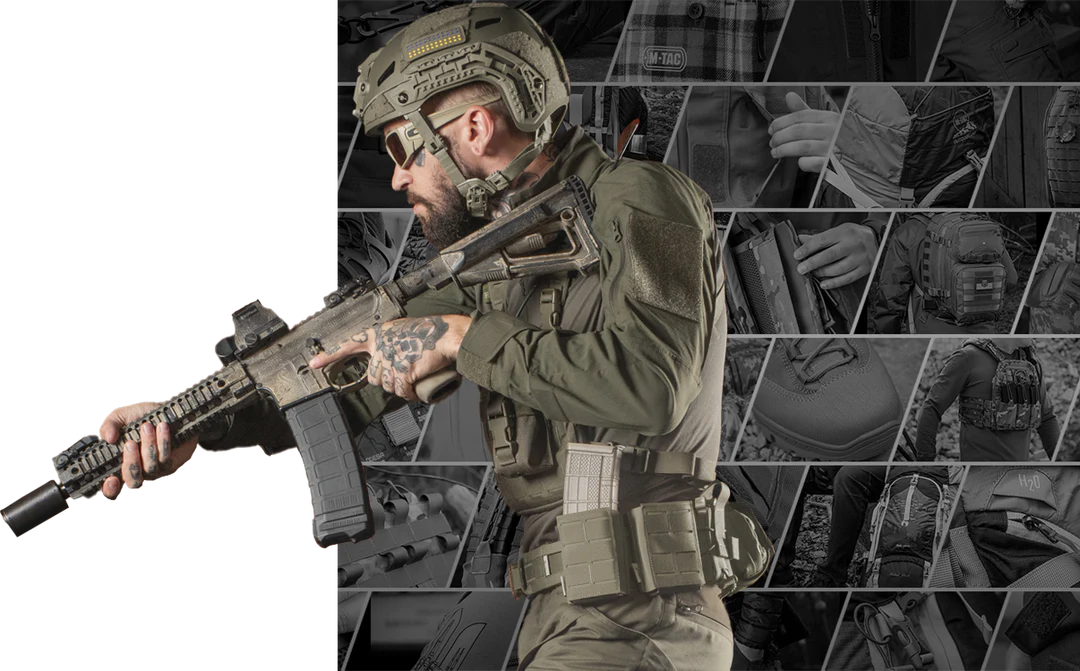
A magazine pouch is not complicated gear. But a wrong choice shows up fast: a flap that costs seconds under pressure, elastic that loses tension after a month, or a pouch that drops a mag every time you go prone. Getting the right pouch comes down to four variables: retention system, capacity, mounting platform, and use case. This guide covers each one.

Retention: The First Decision
Retention is how firmly the pouch holds the magazine in place and how quickly it releases on the draw. Every other feature is secondary to this.
There are three main retention types.
Open-top with friction or elastic. No flap, no cord, no cover. The pouch holds the magazine through wall tension, elastic pressure, or a shaped insert. This gives the fastest draw: a single motion with nothing to clear. Timed field evaluations place open-top pouches at roughly 1.8 seconds for a full reload. The tradeoff is that retention depends entirely on tension, which degrades with elastic over time and offers less security during high-movement situations like running, crawling, or vehicle operations.
Bungee or shock cord retention. A bungee retention system runs an elastic cord across the magazine opening, applying constant inward pressure against the magazine body. It sits between open-top and flap in both security and speed. The cord holds the magazine under dynamic movement better than a purely friction-based design, while preserving most of the draw-speed advantage over a flap. Timed evaluations average around 2.9 seconds for this type. One practical note: if the shock cord is damaged or stretched, retention drops significantly. Worth inspecting periodically.
Flap with Velcro or buckle. A flap covers the magazine and secures with hook-and-loop, a snap, or a buckle, in increasing order of retention strength. Flapped pouches are the slowest to access, averaging 4.4 seconds for timed reloads. They are also the most secure in harsh conditions: the flap keeps out rain, mud, and debris, and the magazine will not come loose regardless of movement or impact. Flap pouches ensure magazines stay secure when environmental protection matters more than draw speed.
One useful feature: some flap models allow the flap to fold back and lock open, converting the pouch to open-top when conditions allow it. This kind of convertible design covers both scenarios without carrying two separate pouches.

Capacity: Single, Double, or Triple
How many magazines you carry up front changes how your kit balances and how quickly each mag is accessible.
A single mag pouch keeps the lowest profile. It works well for setups where weight and bulk are the priority: concealed carry, plain-clothes duty, or any role where a slim, low profile matters more than carrying volume.
A double mag pouch is the standard for most plate carriers and chest rig setups. Two magazines sit side by side or stacked, keeping reloads balanced at the front of the rig. M-Tac offers several double pouch options: the Double Open Top AR/AK Mag Pouch ($43) for standard open-top carry, the Double Open Top AR/AK Mag Pouch Laser Cut Gen III ($40) with Laser Cut MOLLE facing, and the Double Mag Pouch with Flap ($42) and Double Mag Pouch with Fastex Buckle ($58) for covered carry.
A triple mag pouch carries more ammunition in a compact footprint. The M-Tac Elastic Triple Mag Pouch Elite Laser Cut ($55) uses elastic retention across three magazine slots with Laser Cut MOLLE mounting.
The tradeoff with more capacity is bulk and weight up front. Flapped pouches also grow noticeably bulkier when loaded with multiple magazines compared to open-top designs of the same capacity.
Open Top vs Flap: Matching Retention to the Mission
Open-top design works best for range training, competition, and any role where speed of access is the priority and environmental conditions are controlled. There is no cover to clear, no flap to reseat after a reload. Re-indexing, returning a spent magazine to the pouch without looking, is also easier with an open-top design.
Flap pouches belong in field environments: patrol, extended operations, and any situation involving rain, mud, or sustained movement without controlled pauses for magazine management. They protect the magazine from the environment and prevent loss under dynamic conditions. The speed penalty is real but acceptable when retention security matters more than quick access.
For duty setups that shift between both environments, a convertible flap design or a mix of open-top and flap pouches on the same rig is a practical solution.
Mounting Platform: MOLLE, Belt, or Plate Carrier Panel
MOLLE mag pouches attach through horizontal webbing rows using a weave-through connection that distributes load across multiple rows. Standard MOLLE spacing uses 1-inch rows. Laser Cut MOLLE panels replace traditional stitched webbing with clean-cut slots that reduce weight and bulk while keeping the same attachment standard. Most M-Tac pouches use this system.
A MOLLE pistol magazine pouch typically occupies one or two MOLLE columns and sits flat against the carrier or belt panel. The M-Tac Elastic Single Mag Pouch Elite Laser Cut ($25) and Elastic Single Mag Pouch Elite ($24) both mount via MOLLE and work for pistol or compact rifle magazines depending on caliber.
For belt setups, pouches need either MOLLE-compatible belt loops, a paddle mount, or dedicated belt-loop hardware. The mounting system must match the belt platform: a MOLLE pouch on a smooth belt without webbing will not attach securely.
For plate carrier-specific integration, M-Tac offers dedicated front panels: the Front Panel for Cuirass QRS (Three Mags) ($33) and Front Panel for Cuirass QRS (4 Magazine) ($46) integrate directly into the M-Tac Cuirass QRS carrier without separate MOLLE attachment, covering the full front panel with organized magazine capacity.
Horizontal magazine pouches are an alternative for belt carry. A horizontal orientation reduces the height profile on the belt line and can reduce snagging in tight spaces and vehicles. The tradeoff is that the draw angle differs from vertical carry, so the orientation should match how the shooter trains.

Material: Cordura, Elastic, and Thermoplastic
Cordura nylon is the standard material for most tactical magazine pouches. Cordura 500D and 1000D offer abrasion resistance, structure, and durability under sustained field use. M-Tac uses Cordura across the lineup, including in the Double AR/AK Mag Pouch with Flap ($59).
Elastic walls allow the pouch to accommodate magazines of slightly different sizes and profiles. Different magazines for the same firearm can have different baseplates or profiles, and an elastic design handles that variation without adjustment. The tradeoff is longevity: elastic loses tension over time under heat and UV exposure, which gradually reduces retention.
Thermoplastic and Kydex inserts provide rigid, consistent retention with a click-in design that indexes the magazine into a fixed position. Retention is strong and consistent. Some pouches allow adjustable retention via screws, letting the user dial in tension to match their specific magazine profile. The main practical tradeoff in low-noise scenarios is the audible click on insertion.
Pistol Mag Pouches
Pistol magazine carry follows the same principles but with different size constraints. A pistol mag sits lower and narrower than a rifle magazine, which means the pouch design can be slimmer and still provide adequate retention.
The M-Tac Pouch for Pistol Magazine/Multitool Elite ($28) covers standard pistol magazine carry and doubles as a multitool pouch when not running a sidearm. The Open-Top Pistol Magazine Pouch Gen.3 ($33) uses open-top design for fastest access. The Pistol Magazine/Multitool Pouch Gen II Elite ($29) adds updated hardware and broader color selection.
For APS pistol platforms, the Double Pouch for the APS Laser Cut Pistol Magazine Gen.II ($24) provides a dedicated double-mag solution at a lower price point.

By Use Case
- Plate carrier / field use. Priority is retention security and MOLLE compatibility. A double open-top pouch with Laser Cut MOLLE handles most AR/AK platforms. For harsh field conditions, add a flap version or run a convertible model.
- Chest rig. Same priorities as a plate carrier. Front panel real estate is limited, so a double pouch rather than triple typically keeps the loadout balanced and accessible.
- Belt / duty carry. Priority shifts toward comfort during extended wear and re-indexing speed. A belt-mounted pouch should sit at a height where the draw hand reaches the magazine naturally without adjusting posture.
- Training and range. Open-top designs with elastic or bungee retention balance speed and ease of re-indexing for high-volume range sessions.
- Machine gun and specialty platforms. For PKM and M249 setups, M-Tac offers dedicated ammo box pouches: the Closed Pouch M249 Ammo Box ($51), Pouch M249 Ammo Box Fast ($67), and Open-Top Pouch PKM Ammo Box Fast ($74).
Quick Reference
|
Retention Type |
Draw Speed |
Security |
Best For |
|
Open-top / elastic |
~1.8 sec |
Medium |
Range, training, competition |
|
Bungee / shock cord |
~2.9 sec |
Medium-High |
Active duty, dynamic movement |
|
Flap / buckle |
~4.4 sec |
High |
Field, patrol, harsh conditions |

|
Capacity |
Profile |
Best For |
|
Single |
Lowest |
Concealed carry, light kit |
|
Double |
Standard |
Plate carrier, chest rig, belt |
|
Triple |
Higher |
High-volume loadouts |
Prices reflect current listings at the time of writing and may change. Check the product page for current pricing.
FAQ
What is the difference between open-top and flap magazine pouches?
Open-top pouches expose the top of the magazine for faster access, averaging around 1.8 seconds for a full reload. Flap pouches cover the magazine with a Velcro or buckle closure for stronger retention and environmental protection, but access takes longer. The right choice depends on whether draw speed or magazine security is the higher priority.
What does MOLLE mean on a magazine pouch?
MOLLE stands for Modular Lightweight Load-Carrying Equipment. A MOLLE magazine pouch attaches to a plate carrier, chest rig, or belt through a system of horizontal webbing rows. Laser Cut MOLLE uses clean-cut slots instead of stitched webbing to reduce weight and bulk while keeping the same attachment standard.
Can one magazine pouch fit both AR and AK magazines?
Not always. A 5.56mm pouch will not properly retain a 7.62mm magazine and vice versa. M-Tac labels AR/AK compatibility explicitly on pouches designed to accommodate both platforms. Verify magazine dimensions against pouch specifications before mounting.
How do I choose between single, double, or triple mag pouches?
Match capacity to the loadout. Single pouches suit concealed carry or minimal-profile setups. Double pouches are the standard for most plate carrier and chest rig configurations. Triple pouches add volume but increase bulk and weight up front. Actual fit testing on the carrier or belt confirms the configuration before committing to a full setup.
Does bungee retention wear out over time?
Yes. Elastic and bungee cords lose tension gradually under heat, UV exposure, and repeated use. Inspect the cord periodically and replace the pouch or cord when retention feels noticeably looser. Cordura-bodied pouches with rigid retention inserts or thermoplastic designs hold their retention characteristics longer than elastic-only designs.