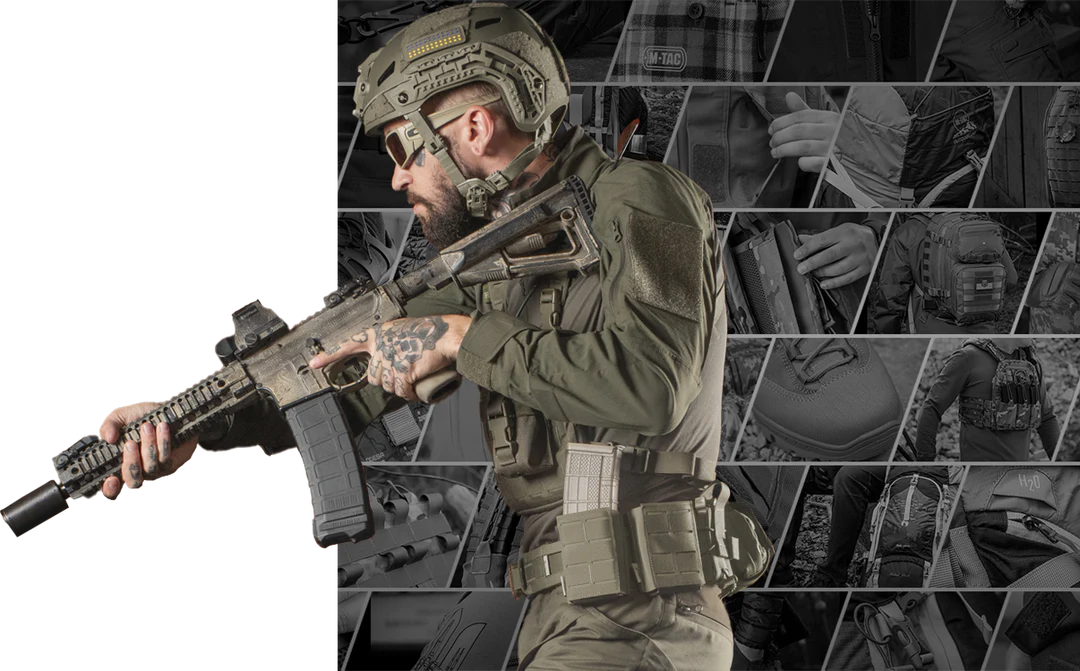
The MOLLE system, short for Modular Lightweight Load-Carrying Equipment, is built around a simple idea — let the user decide where gear should go instead of being restricted by fixed layouts. Using a PALS-style webbing grid made of stitched horizontal straps allows pouches, tools, and accessories to be attached directly to carriers, belts, and backpacks, depending on what the mission demands. When the straps are properly interlaced through both pieces of equipment, everything stays tight and stable, even during long movements, rapid transitions, or low-profile work.

People often confuse the terms. PALS refers to the webbing itself. MOLLE is how you use that webbing to fasten gear. While older systems were developed for speed, MOLLE is built around reliability — meaning the equipment should stay in exactly the same place regardless of conditions. That’s why it has become the standard across modern tactical setups.
MOLLE System vs PALS Webbing vs ALICE: Comparison of MOLLE-Compatible Gear
To understand how MOLLE fits into the bigger picture, a quick comparison makes things clearer:
|
System |
Description |
Strengths |
Limitations |
Typical Use |
|
MOLLE |
Modern attachment method using PALS webbing |
Stable, modular, adaptable |
Takes time to set up properly |
Current military and tactical gear |
|
PALS |
Horizontal webbing used for mounting |
Works with most brands |
Not a mounting method on its own |
Base layer on plate carriers, belts, backpacks |
|
ALICE |
Older attachment system using clips |
Quick to connect |
Gear can shift or rattle |
Mostly outdated or improvised use |
With ALICE, equipment could be attached quickly, but it had a tendency to move or make noise. With MOLLE, the goal is much simpler — weave it tight, and it doesn’t go anywhere.
How the MOLLE System Works
Most MOLLE-compatible gear includes straps or tabs that pass through the webbing grid. The strap goes through one row on the carrier and then back through the pouch, and you keep tightening it as it goes up. This alternating pattern is what stops the gear from wobbling or sagging. A growing number of platforms now use laser-cut panels instead of stitched straps, which reduces bulk while keeping compatibility.

Tactical Placement Logic
MOLLE works best when the layout follows real usage rather than available space. Heavy items are kept close to the body to reduce fatigue. Equipment that may be needed under pressure — like medical gear — should be located where it can be reached with the non-dominant hand. Many operators prefer slim tourniquet carriers to avoid unnecessary bulk. A common example is the M-Tac Pouch for Tourniquet Elastic MOLLE Gen.II, which is intentionally low-profile but still allows fast access.

Key Tips for Setting Up MOLLE Effectively
- Use every available row while weaving — skipping weakens stability.
- If there are multiple straps, tighten them together to distribute pressure evenly.
- After mounting, physically pull and stress-test the pouch — if it moves now, it will move later.
- Avoid stacking too many pouches outward, as it can interfere with prone positioning or weapon access.
- Make sure nothing blocks weapon draw paths or restricts upper body movement.
Modern Enhancements in MOLLE Systems
Some setups now allow external load modules to be mounted directly to a plate carrier rather than carried on the shoulders. This helps distribute weight more evenly during long wear. A field-ready example of this approach is the M-Tac MOLLE Backpack for Plate Carrier Elite, which adds extra capacity without affecting movement.

Small attachment devices are sometimes overlooked, even though they often carry secondary gear. Regular carabiners tend to shift or rotate during vehicle transitions or rapid movement. A better approach is to use webbing-compatible hardware, such as the M-Tac Aluminum Carabiner for Backpack Molle, which locks directly into the MOLLE grid and stays in position without twisting.

Common MOLLE System Setup Mistakes and How to Avoid Attachment Issues
One of the most common issues is filling every piece of webbing simply because it’s available. MOLLE isn’t intended to carry everything you can mount, only what you should.
Excess weight slows reaction time. Another frequent mistake is attaching critical equipment where it becomes blocked by protective gear or additional layers. Some also secure attachments loosely to save time — yet MOLLE works properly only when tension is maintained across the entire attachment.
Final Considerations
MOLLE gives a high degree of flexibility, but it only works properly when each element is attached with intent. When configured correctly, it doesn’t get in the way — it helps reach essential items quicker at the moment they’re needed. At that point, the setup stops feeling like something strapped onto a vest and starts functioning as part of the gear system.
After setting everything up, it’s worth pulling on each mounted element, moving around, and making sure nothing shifts. It’s a basic but necessary habit. If something comes loose during movement, it’s no