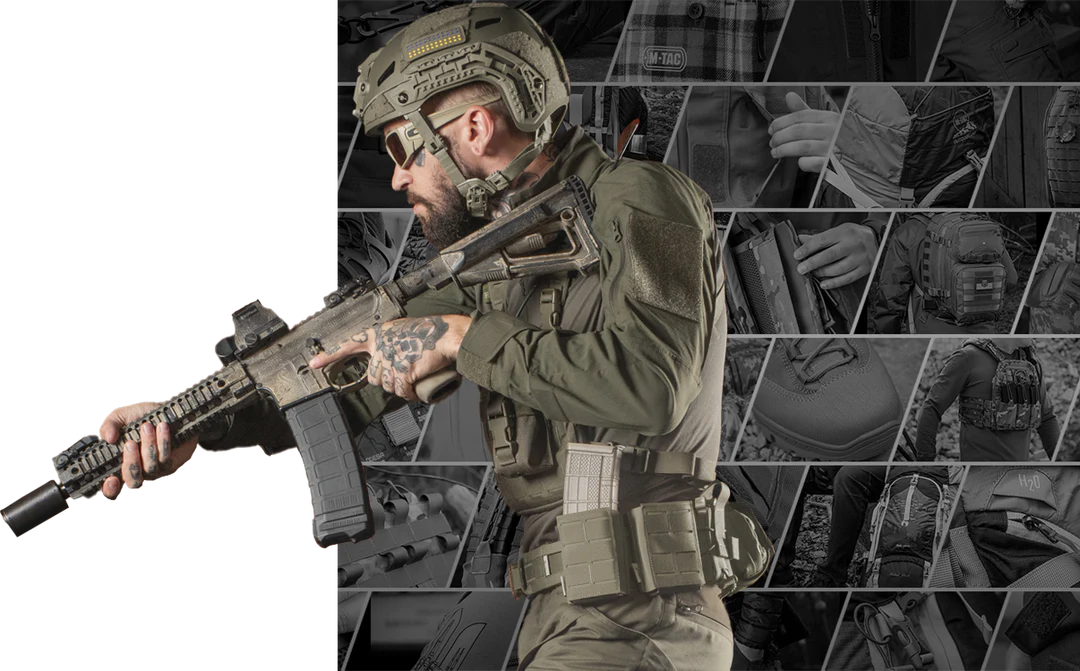
Video games have come a long way from the days when “medic gear” simply meant a red cross painted on a square backpack. Modern AAA titles aim for realism, and in Battlefield 6 that realism extends directly into the gear chosen for the Support-class loadout. Among the most noticeable additions are several items unmistakably modeled after M-Tac’s real-world medical and support equipment.
For a brand built around practical functionality and real field feedback, seeing gear inspired by M-Tac designs inside one of the most-played shooters of the year isn’t just a visual cameo. It’s a reflection of how far modern tactical engineering has influenced mainstream culture.
With Battlefield 6 surging past 747,000 concurrent players on Steam, this integration brings contemporary gear concepts to an audience that spans from military enthusiasts to casual gamers curious about the tools that keep a unit alive in the field.

Why Tactical Gear in Games Matters More Than It Seems
Most players don’t analyze pouches, straps, and compartments while sprinting across a digital battlefield. But the design choices behind Support-class equipment matter—especially when those choices reflect actual field logic rather than Hollywood improvisation.
In many games, medical loadouts were historically simplified for entertainment. Now, developers increasingly turn to functional layouts used by real organizations. When a studio models gear after actual equipment—right down to the orientation of zippers or the placement of a tourniquet—it signals a meaningful shift. It shows that practical gear engineering has made its way from testing grounds and field kits into the global entertainment space.
For brands like M-Tac, whose products are built with durability and operational logic at the forefront, this level of recognition underscores the broader adoption of modern equipment design.

A Closer Look at the Gear Modeled After M-Tac Designs
In Battlefield 6, the Support class is built around fast response, rapid medical aid, and sustained operational movement. Several in-game items follow the familiar architecture of M-Tac’s medical and utility gear, particularly equipment used by medics and field support units.
Below are the most notable examples reflected in the game’s loadouts:
M-Tac Medical Bag CLS Elite
Built around the MARCH algorithm—prioritization used in combat casualty care—this bag distributes supplies in line with real trauma management: bleeding first, then airway and respiration. The way this translates in-game is subtle but clear: essential tools appear positioned where you’d reach for them instinctively, hinting at the same treatment order used outside the screen.
M-Tac Admin Pouch Elite (X-Large)
Typically used for mission documents, compact electronics and small essentials that must be accessed without breaking movement. The in-game equivalent reflects that intent; it doesn't emphasize capacity but rather the idea that what you carry here is something you should find on the first reach, not after searching through layers.

M-Tac Glow Sticks 6" (Set of 5)
A non-electronic marking tool used to indicate a point, safe zone or signal without relying on batteries or environmental conditions. In Battlefield 6, it appears as a lightweight utility item that can quickly draw attention to an area—consistent with how glow sticks are actually used when visibility becomes a tactical factor.
M-Tac Backpack Sturm Elite Gen.II X-Large
Developed with field feedback and meant for short-term autonomy, it balances volume with structured internal access to avoid hesitation when unpacking under stress. The digital interpretation seems to follow that logic: the loadout allows quick reach from the top instead of encouraging the player to shuffle gear, suggesting readiness takes priority over storage capacity.

M-Tac Medical Pouch Horizontal Elite (Medium)
A compact horizontal pouch with access from both sides, used when the operator must retrieve contents without rotating the kit. The in-game layout keeps this orientation logic, reinforcing accessibility over modular flexibility.
M-Tac Medical Pouch Rip Off Gen.II
Designed to detach instantly and open fully for emergency response. In-game, this principle is preserved through immediate deployment rather than sequential unpacking—an accurate nod to how medics position IFAK systems when every movement is part of a timed action.

M-Tac Medical Pouch Horizontal Elite (Large)
Built on the same structure as the medium version but accommodates a wider treatment setup while remaining immediately deployable. The game keeps the expanded volume without altering the approach angle, which indicates recognition of how real medics balance gear size with reachability.
M-Tac Pouch for Tourniquet Elastic MOLLE Gen.III
Positioned so a tourniquet can be drawn without visual confirmation, using a retention system that supports fast removal under stress. The way it functions in the game also suggests speed is valued more than concealment—much like its intended use when fine motor control begins to drop.

The Bigger Picture: Real Gear as a Cultural Touchpoint
For years, tactical gear brands existed in a niche ecosystem: military personnel, emergency responders, outdoor operators, and enthusiasts. But digital media has expanded that ecosystem dramatically.
When gear inspired by real designs shows up in a global AAA game:
- millions of players are introduced to modern field equipment
- the culture around tactical readiness becomes more mainstream
- the authenticity of support roles improves
- the perception of field medical gear shifts from “health pack” to “lifesaving system”
For M-Tac, this isn’t just an aesthetic cameo, it is a touchpoint where digital and real-world logic intersect.
The more accurately games portray equipment, the easier it is for players to understand the true purpose of medical and support gear: fast access, clear organization, and zero room for hesitation.
Support-Class Gear: Game Representation vs. Real Use
Any game will simplify how medical and support equipment works. That’s normal. A digital loadout can’t replicate the weight of a full pack, the pressure of real treatment, or the small decisions that matter in the field. But what it can do is show the basic structure and logic behind the tools.
In Battlefield 6, the Support-class gear isn’t exaggerated or stylized. The developers kept the layouts close to how the equipment is arranged in real conditions: clear access points, predictable placement, and a setup that reflects the role’s purpose rather than just its appearance.
Players aren’t expected to perform real medical tasks, but they do get to interact with a layout that follows the same principles medics use when seconds matter. It’s a simplified version, but the underlying logic is recognizable — and that’s what makes this representation stand out.
Why This Moment Matters for M-Tac
For a company focused on practical gear built around real field requirements, seeing familiar designs show up in a major game is a meaningful milestone. It reflects something simple but important: the logic behind modern medical and support equipment is being recognized outside the professional community.
Most players will never run a medical drill or pack a bag for real field conditions. But they can now interact with gear layouts based on equipment that follows the same organizational principles used by actual medics and support personnel. When millions of people handle a digital version of a tourniquet holder or a structured CLS-style bag, they get a small glimpse into how real-world tools are arranged and why those details matter.
For M-Tac, this appearance isn’t about visibility — it’s about accuracy. The designs that developers chose were not random. They follow the same logic our team follows when building equipment intended for fast access, clear organization, and dependable use under pressure. Seeing that logic represented correctly in a global title is a strong reminder of how functional design translates across different environments, even digital ones.

Final Thoughts
Whether you’re a gamer, a gear enthusiast, or someone who pays close attention to the evolution of tactical equipment, the appearance of M-Tac-inspired gear in Battlefield 6 marks an important moment. It is the point where:
- digital entertainment meets real-world engineering
- support roles are portrayed with greater respect and precision
- gear design becomes part of cultural storytelling
Millions of players will interact with field-inspired equipment—organizing pouches, deploying medkits, and carrying packs built around real tactical logic.
And while the virtual battlefield isn’t the real one, seeing elements of authentic gear represented correctly is a step toward greater appreciation for the tools that support and save lives.